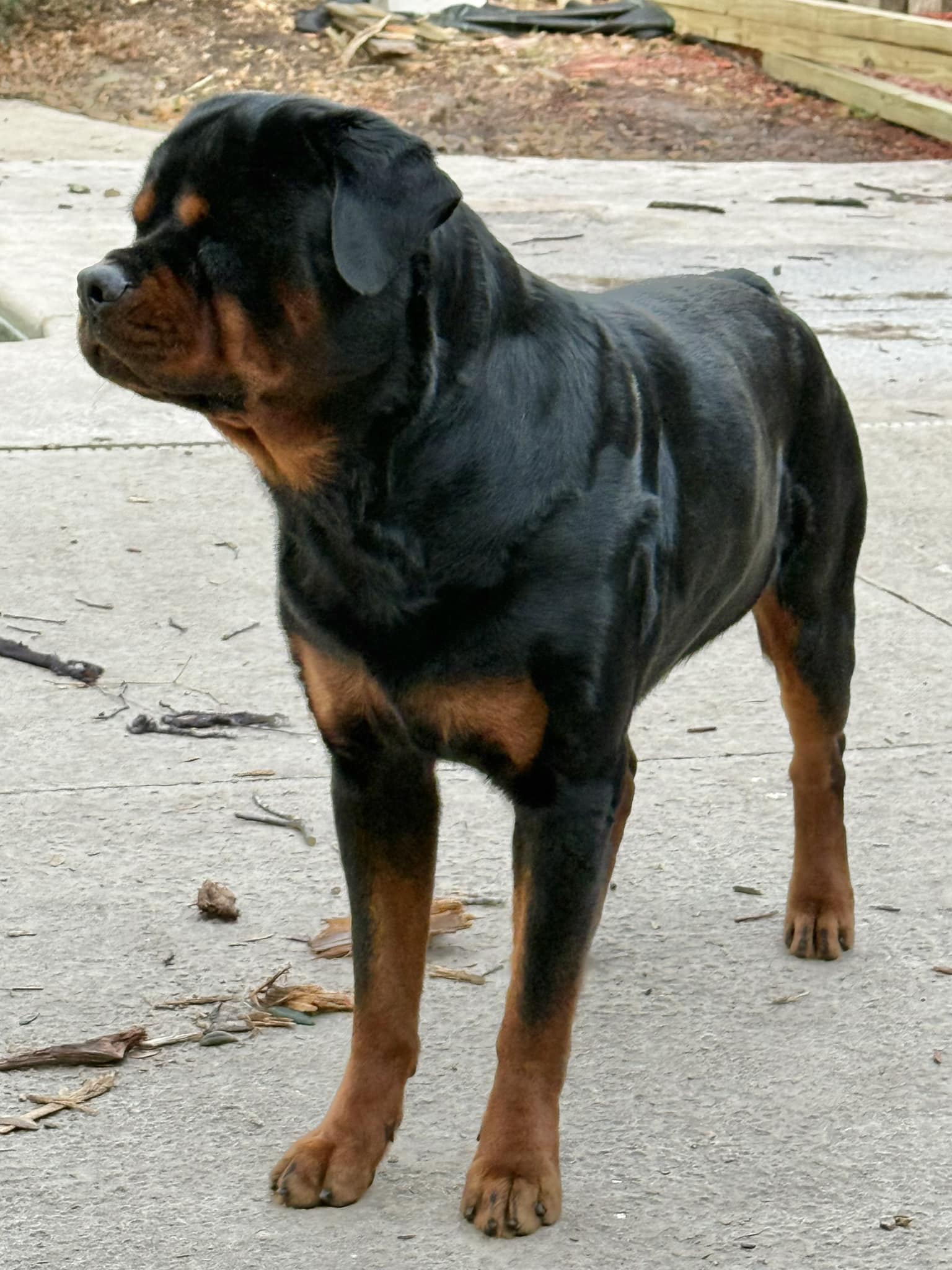
There is more to a Rottweiler than its powerful appearance. Strength, intelligence, and a close connection to people are central to this working breed’s appeal. Learning about its background and needs is a useful first step before welcoming a puppy home.
Dexter vom Swofford · Part of our family in Jacksonville, Florida.
Rottweiler history: from cattle dogs to working companions
The AKC traces the breed’s ancestry to Roman cattle-driving dogs. Its later development centered on Rottweil, Germany, where dogs helped move livestock, guard property, and pull butchers’ carts. The name Rottweiler Metzgerhund means “Rottweil butcher’s dog.”
As transport changed, the breed found other jobs, including police work. Today, Rottweilers can be seen in sporting, service, and therapy roles as well as family homes. The American Kennel Club recognized the breed in 1931; it belongs to the Working Group.
A Rottweiler’s working heritage calls for strength, endurance, awareness, and responsiveness to a handler. Many are affectionate with their families and more reserved with strangers. Physical power makes early manners and thoughtful handling especially valuable.
Family connection: Regular companionship and participation in everyday life matter.
Trainability: Consistent, reward-based training gives an intelligent dog a productive outlet.
Athletic ability: Exercise should suit the individual dog’s age, health, and development.
Versatility: Obedience, tracking, herding, carting, and other activities offer ways to work together.
Temperament varies between individual dogs. Breeding, early experiences, socialization, training, and responsible ownership all contribute to the adult dog.
No. 9 in Stanley Coren’s widely cited canine intelligence ranking. The AKC discusses this ranking on its website. It is associated with working and obedience intelligence, not an AKC-issued intelligence title or a guarantee about an individual puppy.
For an owner, intelligence is an invitation to do things together: teach useful skills, try scent games, and provide purposeful activities. Clear expectations and consistent rewards help a dog learn how to live successfully alongside its family.
No. 8 in the AKC’s 2025 popularity rankings. This annual ranking is based on AKC registrations. It describes registration popularity, rather than intelligence, health, or suitability for every household.
Plan for daily exercise, mental stimulation, regular companionship, and ongoing training. Early socialization should introduce a puppy to people, places, and everyday experiences at a comfortable pace. Supervise interactions with young children, as you would with any breed.
Before choosing a puppy, discuss the parents’ temperament, available health records, and the breeder’s approach to raising the litter. Consider your own schedule and experience, too. A good match begins with honest questions.
At Vom Swofford Rottweilers, Jeff and Katie welcome conversations about our dogs and your plans for a puppy in Jacksonville, Florida.